Why Bedtime Stories Help Babies and Toddlers Sleep
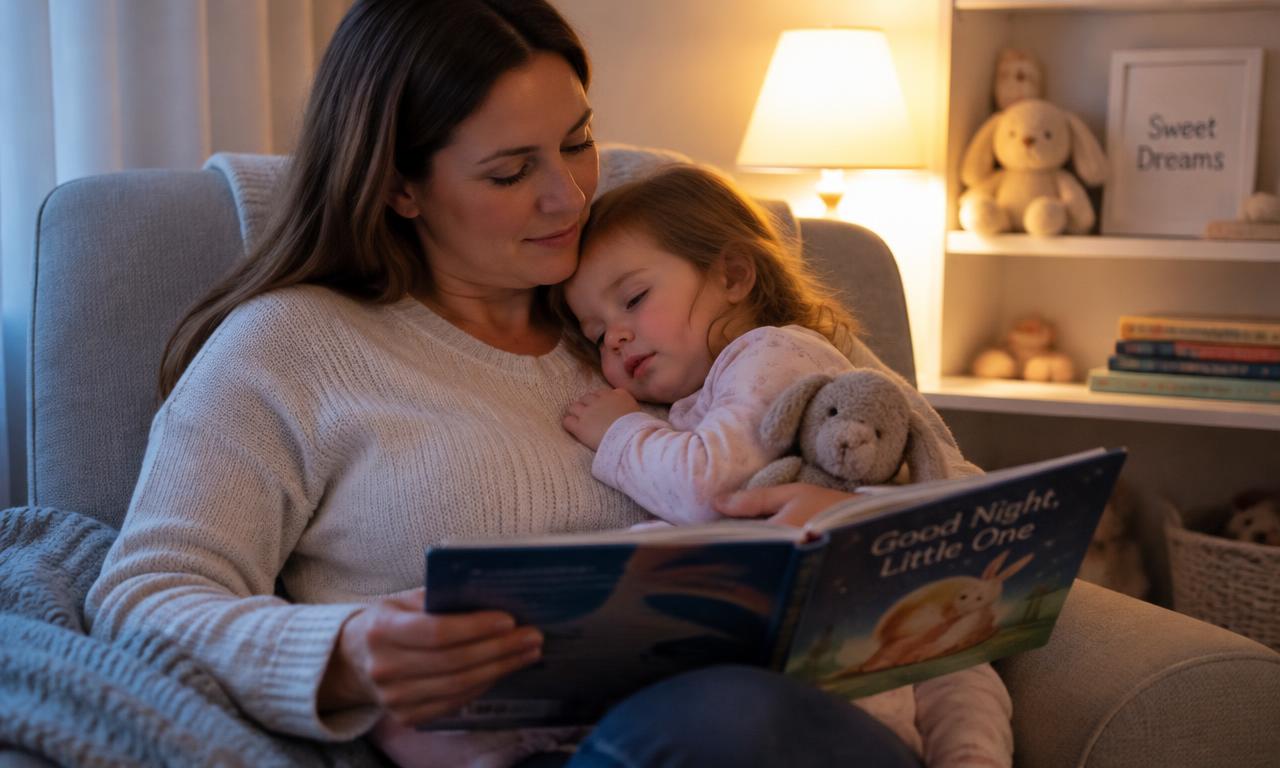
Almost every bedtime routine that works has a story in it somewhere. Not because stories are magic, but because they do three unglamorous things at once: they slow the pace of the evening, they put a familiar adult voice close by, and they mark a boundary between the noisy part of the day and the quiet part.
What a story actually does at bedtime
Small children do not fall asleep because they are tired. They fall asleep when they are tired and calm enough to let go. Most bedtime battles in Australian homes are a calm problem, not a tiredness problem — an overstimulated toddler with a full tank of adrenaline is not going to drift off no matter how late it is.
A story lowers the temperature of the room. Your voice drops, the pace slows, there is nothing to chase or climb, and the child's attention has somewhere gentle to go. It is the same mechanism that makes a slow lullaby work, which we cover in why babies sleep better with lullabies.
Predictability is the active ingredient
The Raising Children Network's advice on bedtime routines comes down to one idea: same steps, same order, same time, every night. A story is an easy step to keep identical. Bath and dinner move around depending on the day; a story at the end of the bed does not.
This is also why reading the same book for six weeks straight is fine. Your child is not bored — they are learning the shape of the evening. Knowing exactly what comes next is what allows a toddler to stop monitoring the room and start winding down.
Age by age
- 0–6 months. The words do not matter. Your voice, held close, at a slow pace, is the whole benefit. Two or three minutes is enough.
- 6–12 months. Pictures start to hold attention. Board books, short sentences, five minutes.
- 1–2 years. The peak of repetition. One familiar story, read the same way, five to eight minutes.
- 2–4 years. Story becomes a negotiating tool — and a very good one. Ten to fifteen minutes, one story, agreed in advance.
We go into word counts and page lengths in more detail in how long a bedtime story should be.
Where the story sits in the routine
- Bath and pyjamas — the transition out of the day.
- Feed or milk, with the lights already dropping.
- Into the bedroom. Curtains closed, lamp only.
- Story. Sitting beside the cot or bed, not in the lounge room.
- A quiet song, then goodnight.
Reading in the bedroom rather than the lounge matters more than parents expect. If the story happens somewhere else, the child still has a journey to make afterwards — and that journey wakes them up again.
When a story is the thing that ends the battle
For toddlers who stall, the story is leverage in the nicest possible sense. Bedtime stops being something taken away from them and becomes something they get. "Teeth done by seven and there's time for the whole story" works far better than counting down to lights out. There is more on this in toddler bedtime battles.
A story with your child in it
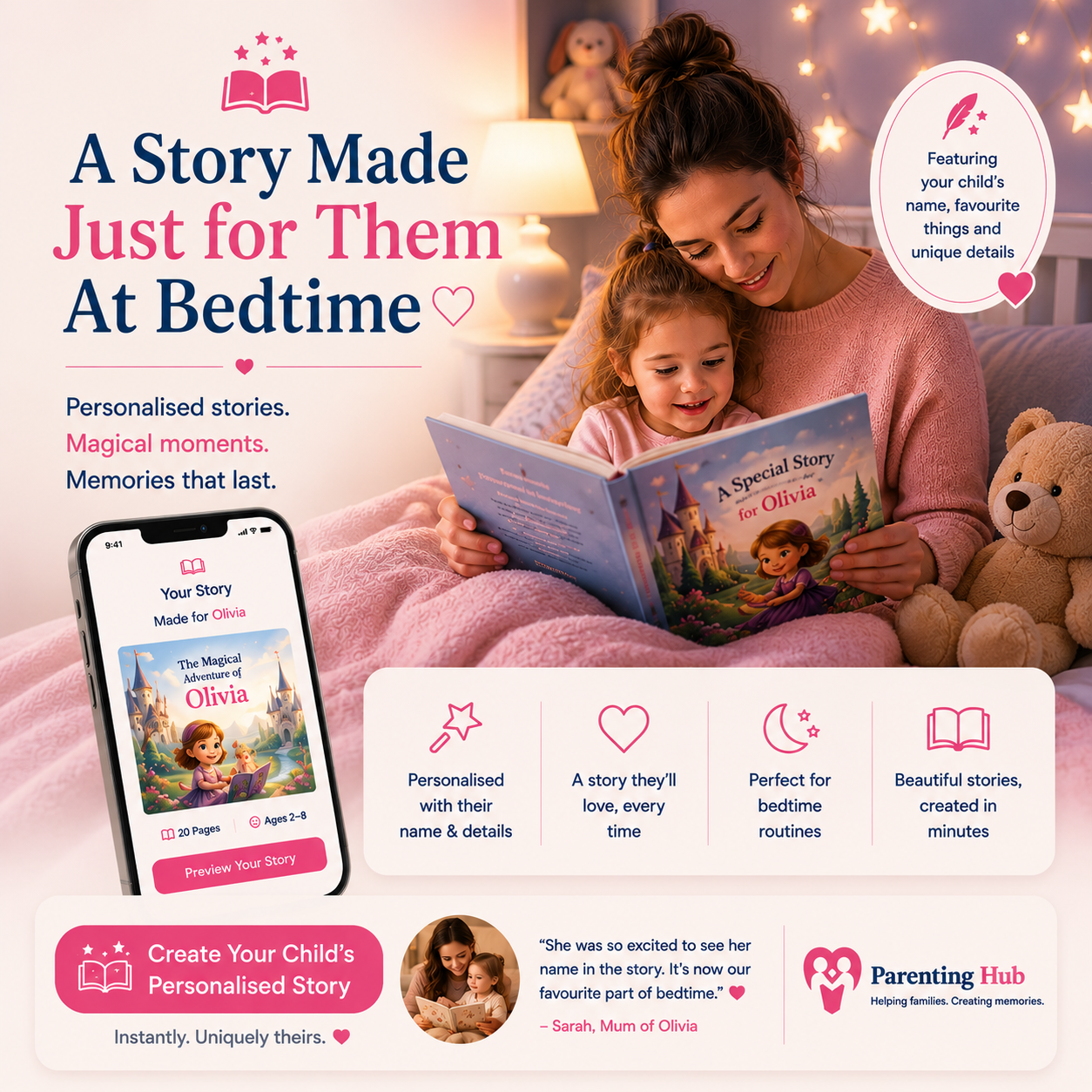
Children orient to their own name faster than to any other word, which is the reason personalised books hold attention so well at the end of a long day. A story where your child is the one crossing the moonlit garden gives them something to be, not just something to hear — and it turns the same book into one they ask for again tomorrow.
Our own storybooks are ten illustrated pages built around your child's name and a theme you pick, with narration you can play back on nights when reading aloud is beyond you. You can see how the personalised bedtime story works before you make one.
Personalised Bedtime Story
A Bedtime Story Starring Your Child
Ten illustrated pages, 32 themes, your child's name woven through the story — with soft narration you can play at bedtime. From $49.99 AUD.
Create Your Child's Story ✨Frequently Asked Questions
At what age do bedtime stories start helping with sleep?
From birth, though for different reasons. Under six months a story is really about your voice and rhythm, which lowers arousal. From around 12 months the story itself starts doing work — it gives your child something predictable to focus on instead of resisting bed.
How long should a bedtime story take?
Five to ten minutes for babies and young toddlers, up to fifteen for preschoolers. The point is the predictability, not the length. A short story every night beats a long story three nights a week.
Does the same story every night get boring?
For you, yes. For your child, repetition is the feature. Hearing the same words in the same order tells a young brain what happens next, and knowing what happens next is what makes a routine calming.
Should the story be the very last step before sleep?
Close to it. Most Australian sleep guidance suggests ending in the room where your child sleeps, lights low, with something quiet. A story, then a song, then goodnight is a sequence that works for a lot of families.
Can an audio story replace reading aloud?
It can carry the routine on nights when you cannot be there or your voice is gone, and a narrated story is a genuine comfort for many children. On ordinary nights, though, reading aloud yourself adds the closeness that audio cannot.

Sample: Olivia's lullaby
Create Your Baby's Personalised Lullaby
A soothing, personalised lullaby made just for your little one — with their name, gentle vocals, and calming melodies designed to help them drift off to sleep.
- Instant digital delivery
- Secure checkout
- Trusted by families worldwide
- Free preview before you buy
Personalised Bedtime Story
A Story Made Just for Them at Bedtime
A magical bedtime story featuring your child's name, favourite things and unique details — created in minutes.
Create My Child's Story ✨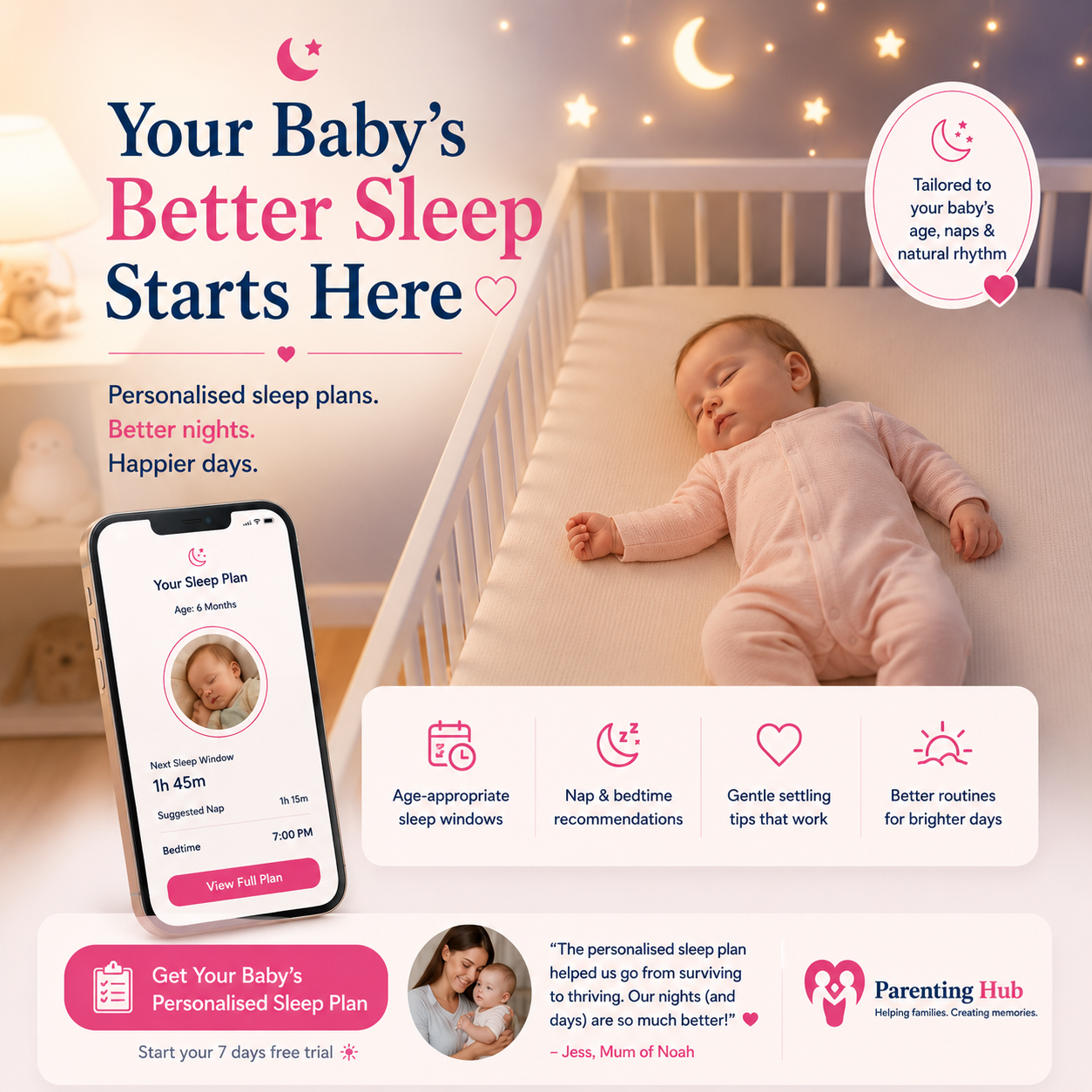
Personalised Sleep Plan
Get Your Baby's Personalised Sleep Plan
Answer a few quick questions about your baby's age, naps, and mood — and get a tailored bedtime plan with suggested sleep windows and settling tips.
Generate Sleep Plan 🌙🌙 Related Baby Sleep Guides
Why Babies Sleep Better with Lullabies
Discover why lullabies help babies sleep better. Learn the science behind personalised baby lullabies, parent-voice bonding, and how to build a calming bedtime routine.
Personalised Bedtime Stories: Why Children Settle When They Hear Their Own Name
Why a bedtime story with your child's name in it holds attention and settles faster — plus what is actually worth personalising.
The 20-Minute Bedtime Routine That Ends With a Story
A twenty-minute bedtime routine for babies and toddlers, step by step, ending with a story and a quiet song.