
Witching Hour Baby: Why It Happens and How to Get Through It
Five o'clock arrives. Dinner needs cooking. And your previously calm baby starts crying as though personally betrayed by the sunset. Welcome to the witching hour — the most predictable, least talked-about pattern of the first three months.
It is not something you caused. It is a developmental pattern almost every Australian baby moves through. This guide shows you exactly what is happening, how to lower the volume of it, and the one ambient sound trick that almost always helps.
What's actually happening at 5pm
Three things converge:
- Sensory overload. Your baby has been awake, on and off, since 6am. Their nervous system has run out of buffer.
- Hormonal shift. Cortisol naturally rises late afternoon; melatonin hasn't yet kicked in.
- Milk supply dip. Most breastfeeding parents have lower volume late afternoon, prompting cluster feeding.
It is biology, not behaviour.
The Australian 5pm calm-down routine
- 4:30pm — close blockout blinds in the nursery so the room is already dim.
- 4:45pm — short pram walk or balcony breeze; movement and fresh air lower cortisol.
- 5:00pm — feed (offer both sides if breastfeeding); top-up bottle if needed.
- 5:30pm — switch on an ocean-wave lullaby; carry baby in arms or carrier with gentle bouncing.
- 6:00pm — second feed if cluster-feeding; bath if part of your routine.
- 6:30pm — into a swaddle or sleeping bag, drowsy but awake, lullaby still playing.

Why ocean waves under a lullaby work
Layered ambient sound — soft ocean swells layered under a gentle melody — mimics the rhythmic, low-frequency shushing of the womb. Research from infant sleep clinics shows this combination lowers heart rate within 90 seconds in fussy newborns.
White noise alone can work, but the lullaby melody adds rhythm; the ocean swells add the womb-like enclosure. Together they are stronger than either one alone — and gentler than a vacuum-cleaner-volume white-noise machine.

Sample: Olivia's lullaby
Try an Ocean Waves Lullaby Tonight
A personalised lullaby with our Ocean Waves theme layers soft ocean swells under a gentle melody, sung with your baby's name. Most parents tell us their newborn calms within two minutes.
- Instant digital delivery
- Secure checkout
- Trusted by families worldwide
- Free preview before you buy
What about colic?
Colic is defined as inconsolable crying for more than 3 hours a day, 3 days a week, for 3 weeks. If you suspect colic, see your GP or child health nurse. Many "colicky" babies are simply having an intense witching hour plus reflux. Either way, you deserve support — call Tresillian or Karitane's free 24-hour line.
Pulling it together
The witching hour will pass — usually by 12 weeks. Until then, stack the deck with dim light, movement, layered sound and a stable end-of-day rhythm. For more on the sounds that calm babies, see lullaby vs white noise.
Frequently Asked Questions
What is the witching hour with a baby?
The witching hour is a stretch of evening fussiness — usually between 5pm and 10pm — when otherwise content babies cry, cluster feed and resist settling. It peaks at 4–8 weeks and usually fades by 12 weeks.
Why does it happen at 5pm?
By late afternoon, babies have accumulated more sensory input than their immature nervous system can process, and cortisol rises. Add a tired parent, dinner prep and lower milk supply, and you have a perfect storm.
How long does the witching hour last?
Most Australian babies show witching-hour fussiness from week 2 to week 10–12. The peak is usually 6–8 weeks; by 3 months, evening regulation improves.
Can a lullaby with ocean waves help?
Yes. Layered ambient sound — like ocean waves under a gentle lullaby — mimics the rhythmic shushing of the womb and lowers cortisol within minutes.
When should I worry?
If your baby cries inconsolably for more than 3 hours a day, 3 days a week, talk to your GP or child health nurse to rule out reflux, allergy or colic — and to get support for yourself.

Sample: Kiara's lullaby
Create Your Baby's Personalised Lullaby
A soothing, personalised lullaby made just for your little one — with their name, gentle vocals, and calming melodies designed to help them drift off to sleep.
- Instant digital delivery
- Secure checkout
- Trusted by families worldwide
- Free preview before you buy
Personalised Bedtime Story
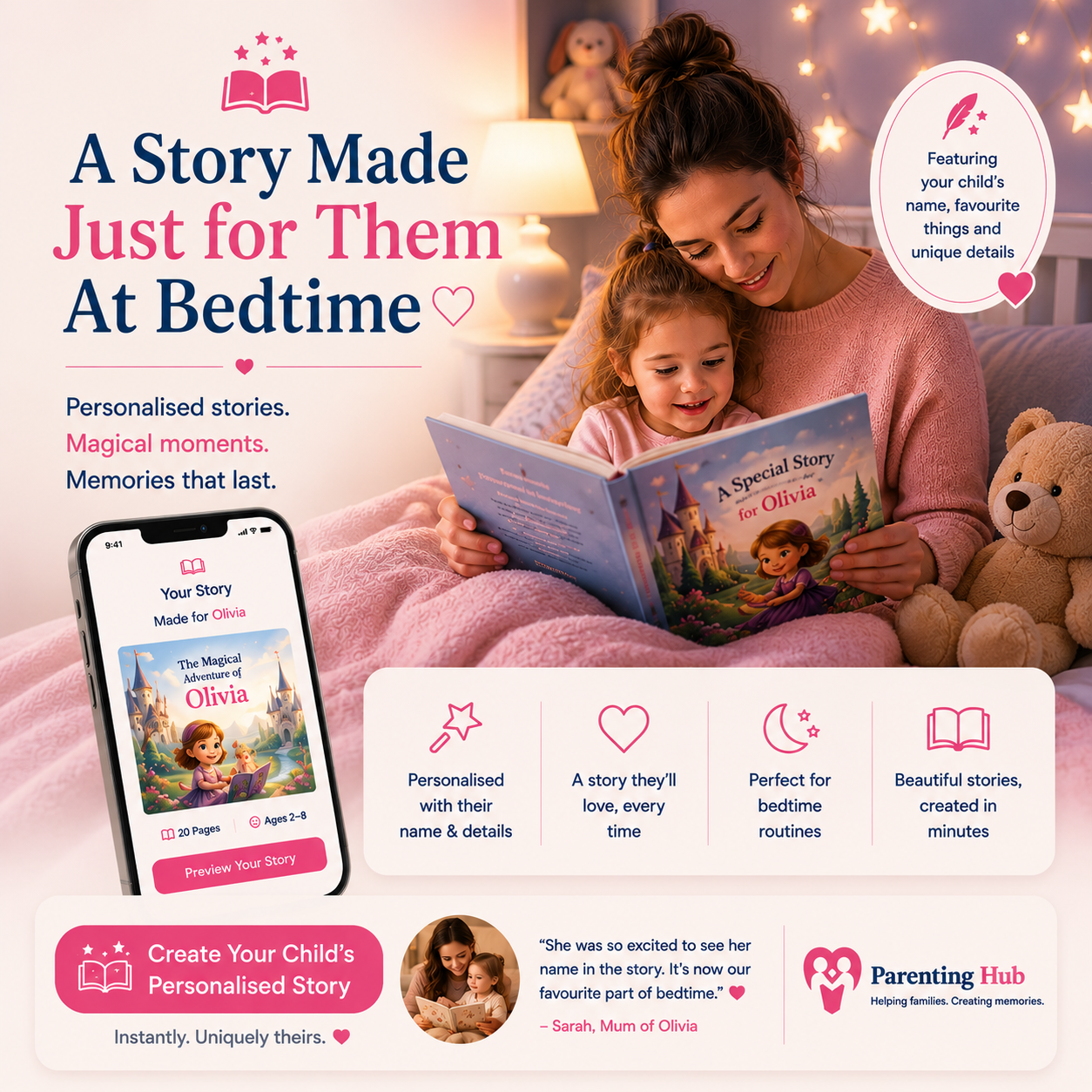
A Story Made Just for Them at Bedtime
A magical bedtime story featuring your child's name, favourite things and unique details — created in minutes.
Create My Child's Story ✨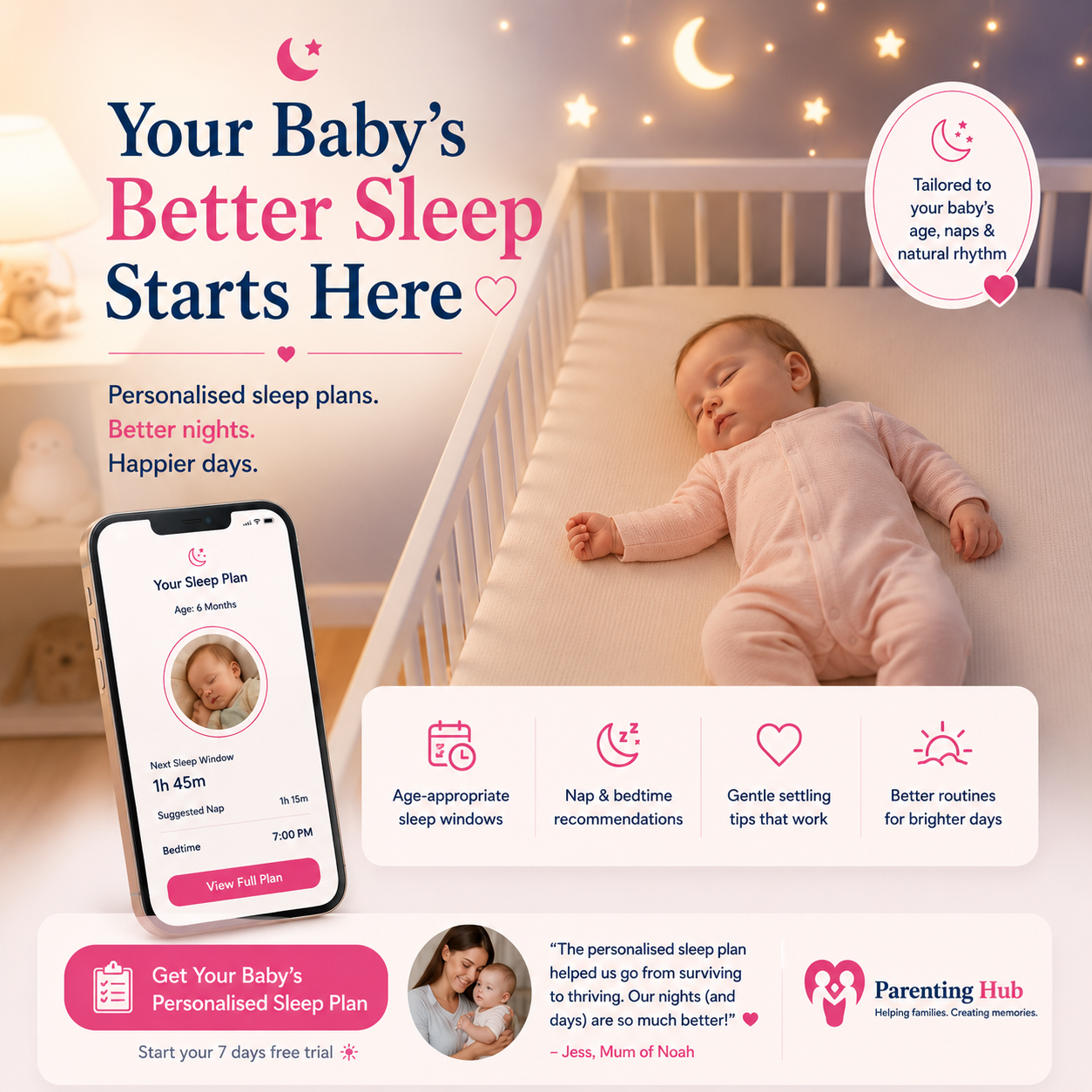
Personalised Sleep Plan
Get Your Baby's Personalised Sleep Plan
Answer a few quick questions about your baby's age, naps, and mood — and get a tailored bedtime plan with suggested sleep windows and settling tips.
Generate Sleep Plan 🌙🌙 Related Baby Sleep Guides
Why Babies Sleep Better with Lullabies
Discover why lullabies help babies sleep better. Learn the science behind personalised baby lullabies, parent-voice bonding, and how to build a calming bedtime routine.
Lullaby vs White Noise: Which Actually Helps Baby Sleep?
Lullaby vs white noise — what each one does, when to use them, safety basics for Australian parents, and how to combine both for deeper baby sleep.

Overtired Baby: Signs and Gentle Fixes for Australian Parents
How to spot an overtired baby early — plus the calm Australian settling routine and personalised lullaby cue that rescue bedtime within minutes.